

About Njunu Tea Factory
Mission
To Provide Effective And Efficient Services In Production, Collection And Processing Of High Quality Teas For The Benefit Of Growers And Other Stakeholders.
Vision
To Be A World Market Leader In Efficient And High Quality Tea Production And Processing Under The Best Standards To Enhance The Living Standards Of Our Growers And Other Stakeholders.
-
Acreage: 3176.07 acres planted
-
Average yield per acre: 5250 Kgs
-
Average revenue per acre: 457,800 Kshs
-
No. of Growers: 5377
-
No. of Staff: 55
-
Avg. annual volume processed: 16M Kgs
-
3 years Value of payment: 3,179,516,931 Kshs
-
3 years Value of Revenues: 3 Billion Kshs
NJUNU Tea Factory is located in Gatanga Sub-county of Muranga County. The Factory is situated along Thika – Gatanga Road about 37 kms West of Thika and approximately 78 Kms from Nairobi City of Kenya.
The area under which the factory lies is about 10 acres of land with a catchment area of approximately 1,286 Hectares of land under tea.
Climatically it lies in upper middle altitude at an altitude range of 2150 m.a.s (highest) and 1750 m.a.s. Level (lowest) and longitude of 360 53’E and latitude of 00. 47’S with the soil type marginally varying as well drained, deep, dark, red to yellowish red friable to firm, sandy clay with humic acid soil ie Humic Acrisols on tertiary as basic igneous rocks.
Approaching the factory from Thika town side is the Great famous Ndakaini Dam from which Nairobi Town and Environs get fresh water supply.
The Dam gets its water from the scenic Aberdares Ranges with the Aberdares forest. This has the horizon with naturally designed ranges green from the earth with intertwining carpet strips of green tea bushes within.
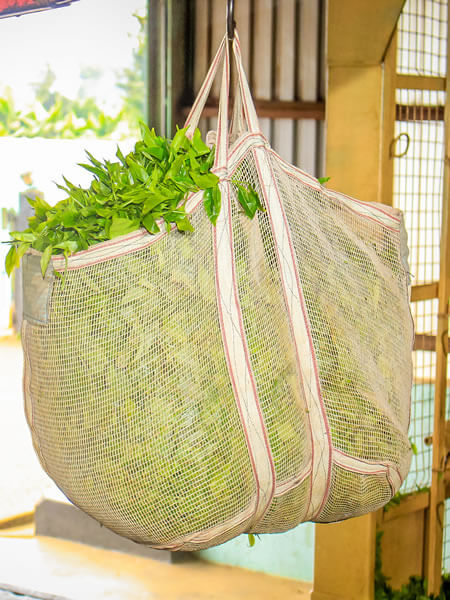
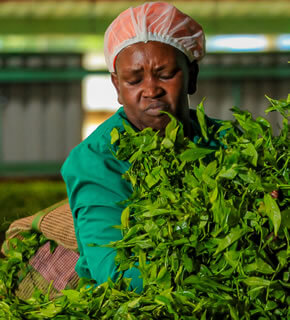
Njunu catchment criss-crosses different ecological and cultural diversities varying from grassy to forested environments. The average daily temperatures are about 260C which enables attainment of withers by applying minimum steam. The withers bring out full cup qualities of black tea. Attaining a balanced cup in terms of liquor comes without much struggle. The local people around here have a tradition of serious tea drinking culture of good tea and also pick the best from their farms. Tea picking is done manually which boosts the accuracy of picking good quality tea. The catchment still has vast area yet to be exploited with a rich store of nutrients conducive for tea growing.


